Spring 2026 · Seneca Rocks, WV
3 Days · 2 Nights · 21 River Miles
A self-supported kayak camping trip through one of the most scenic river corridors in the eastern United States. Crystal clear water, Class I-III rapids, and 440-million-year-old quartzite towers rising 900 feet above the river.
Explore the TripThe North Fork of the South Branch of the Potomac River runs 43.6 miles through some of the wildest country left in the eastern U.S.
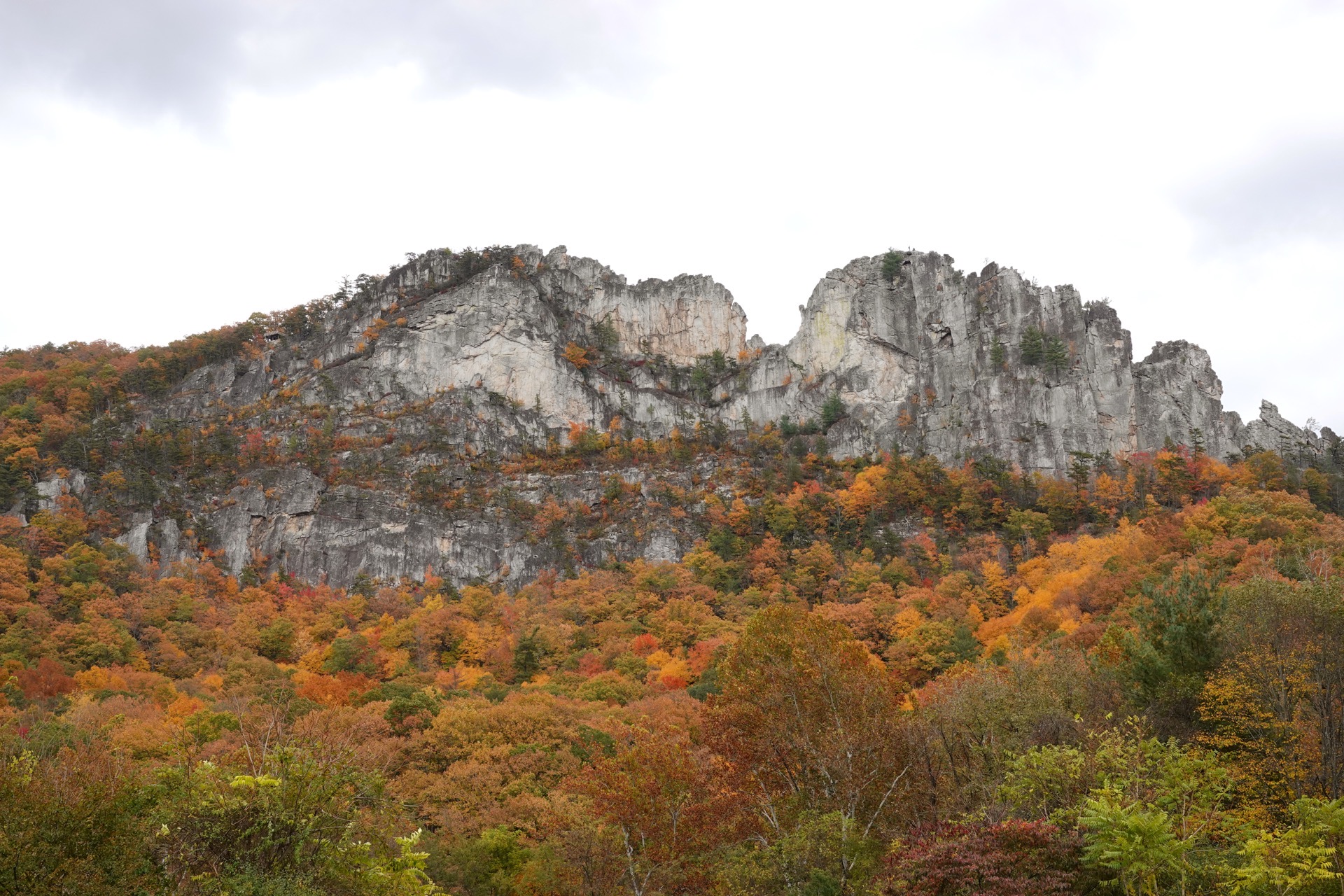
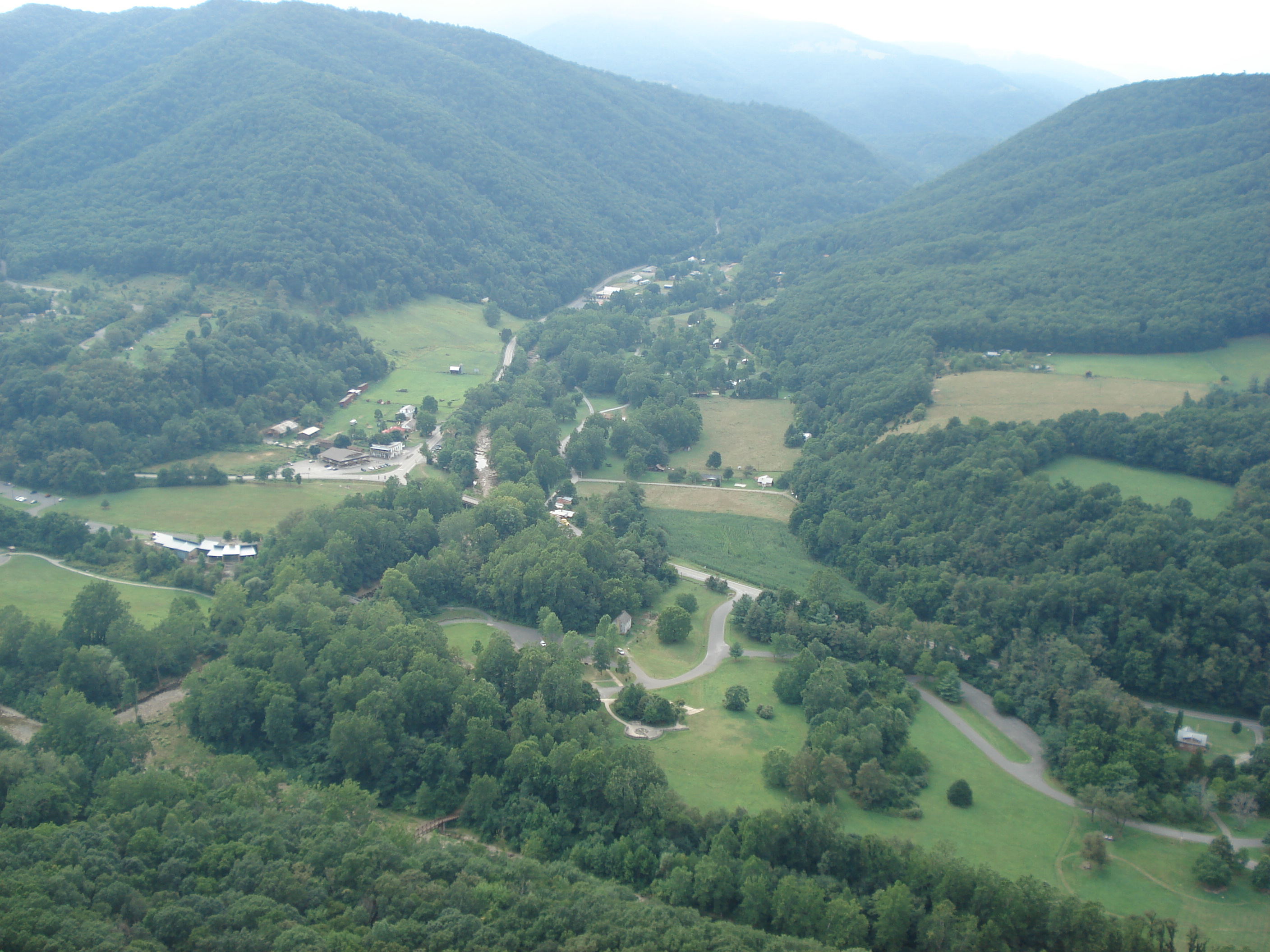
Photo: John Brighenti / CC BY 2.0
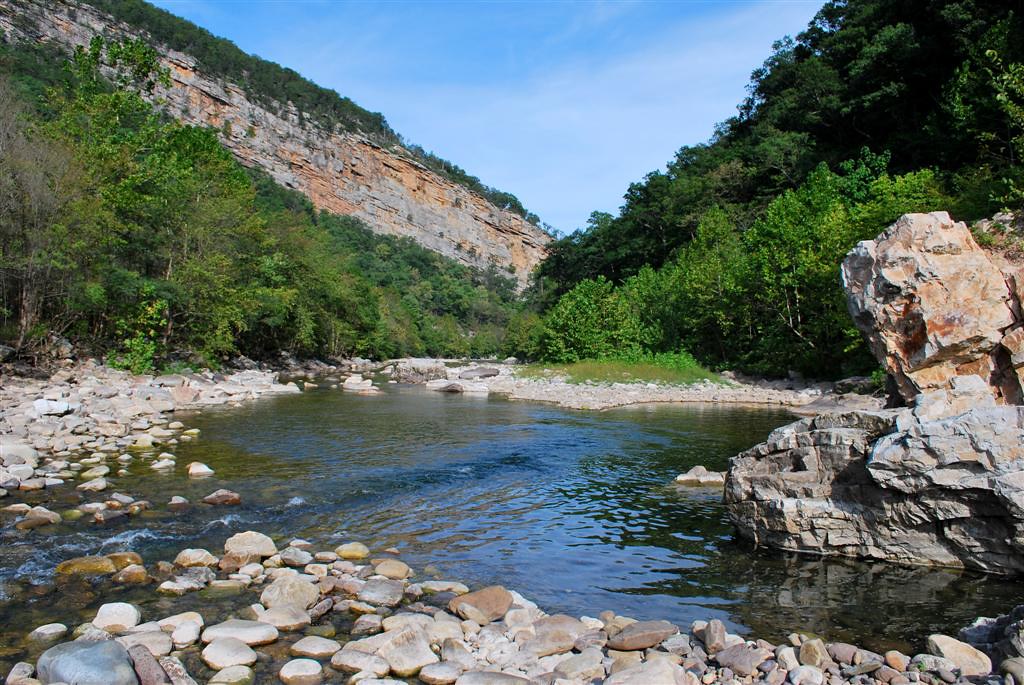
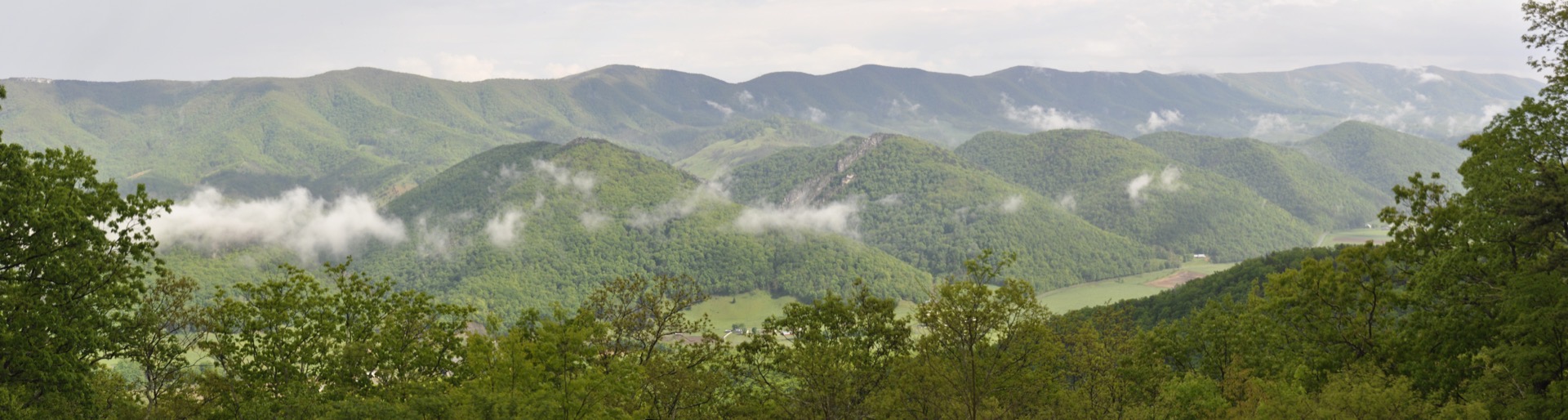
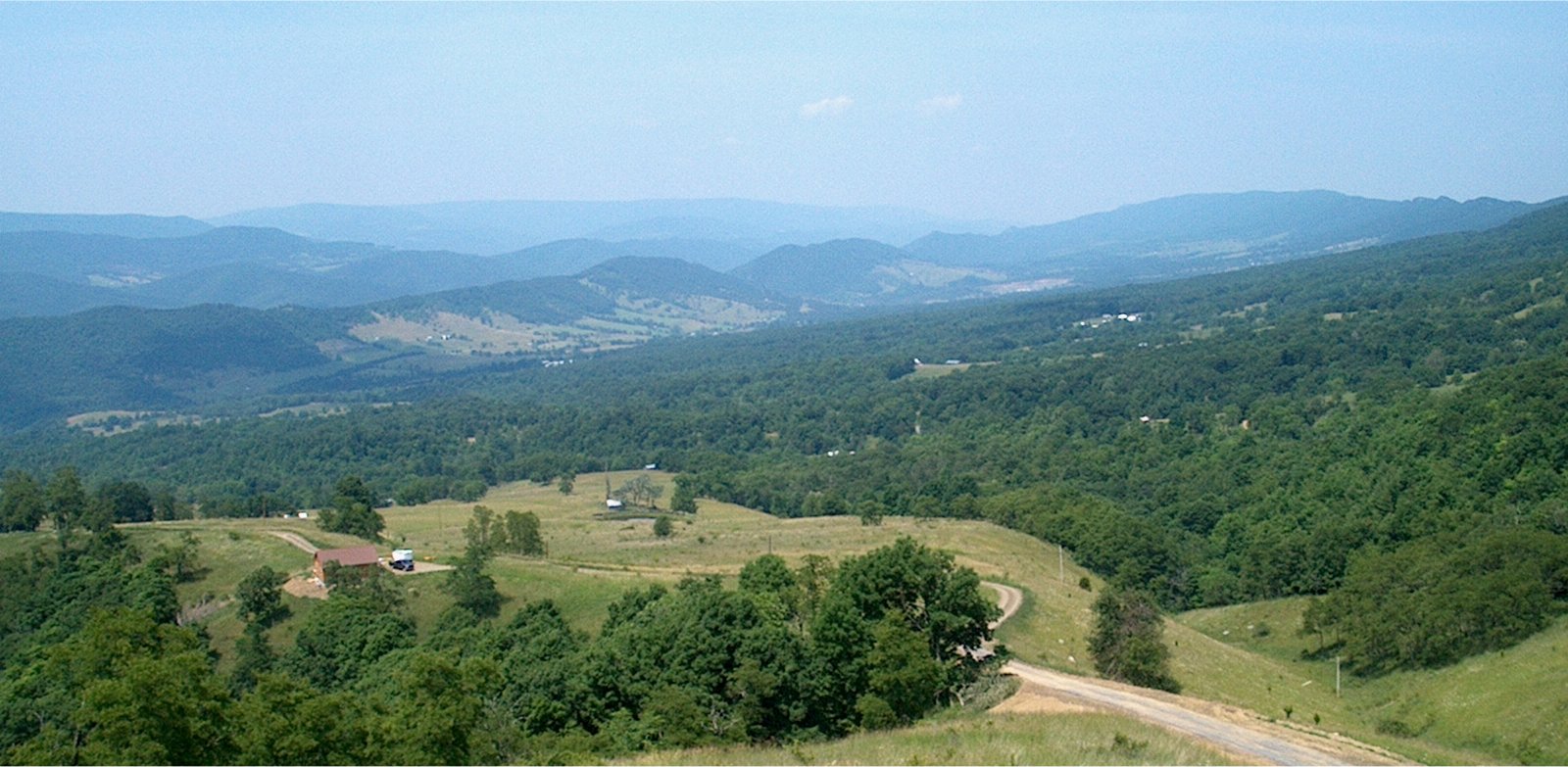
Flowing northeast through Pendleton and Grant Counties in West Virginia, the North Fork carves through the Monongahela National Forest along the western edge of North Fork Mountain. The water is cold, clean, and crystal clear -- a rock-and-gravel-bottom mountain river fed by springs and snowmelt.
This area sits in the rain shadow of the Allegheny Front, making it the driest ridgeline in the Appalachian chain. That means spring is the only reliable paddling window. March through mid-May is when the water runs, and that's when you go.
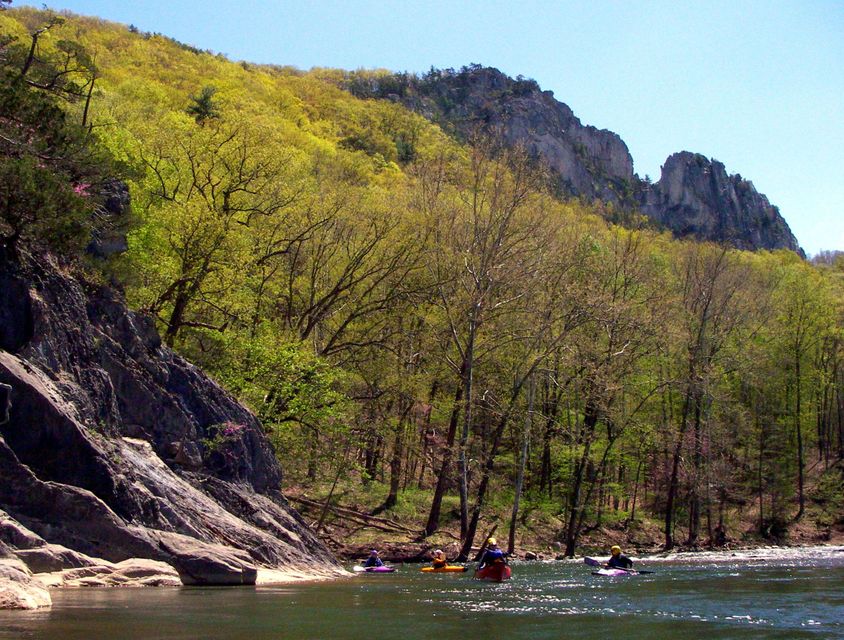
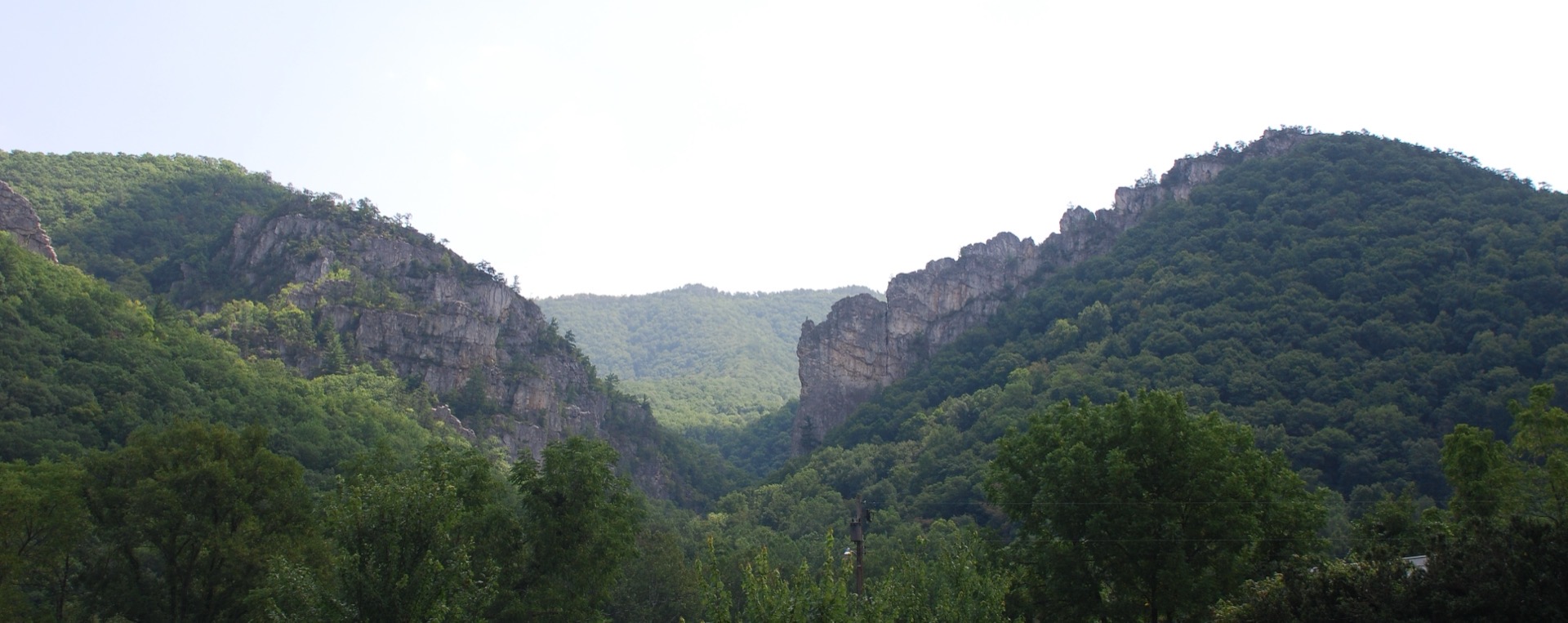
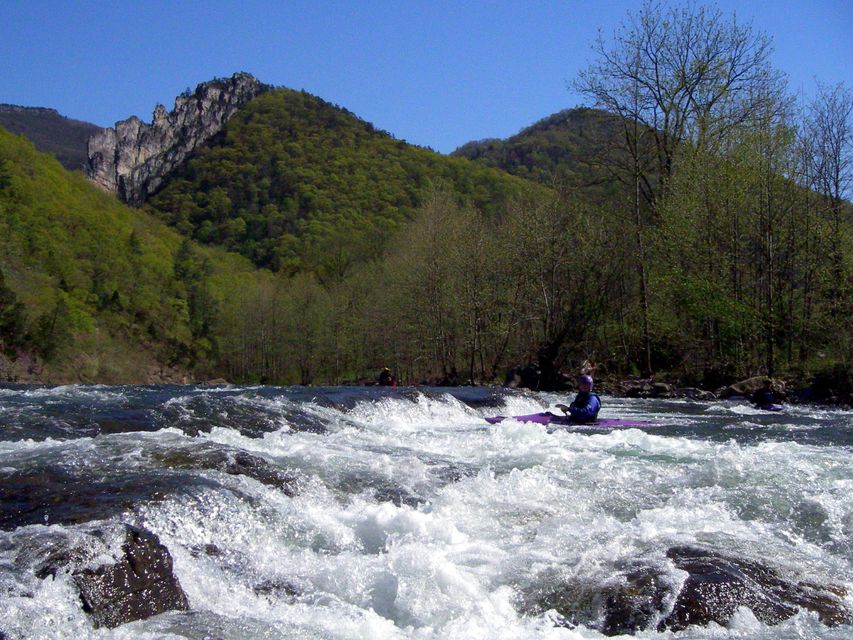
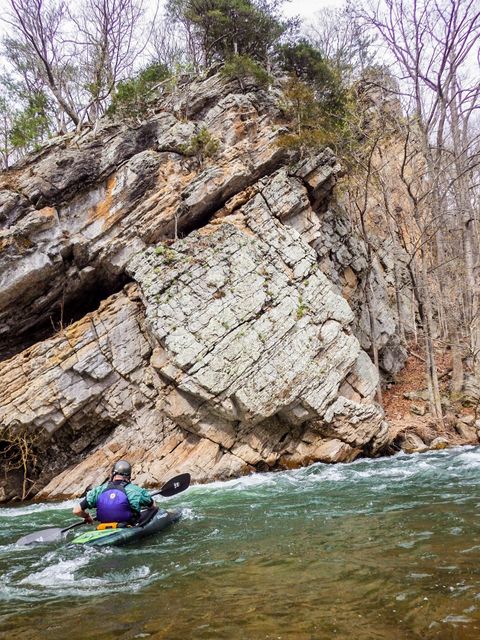
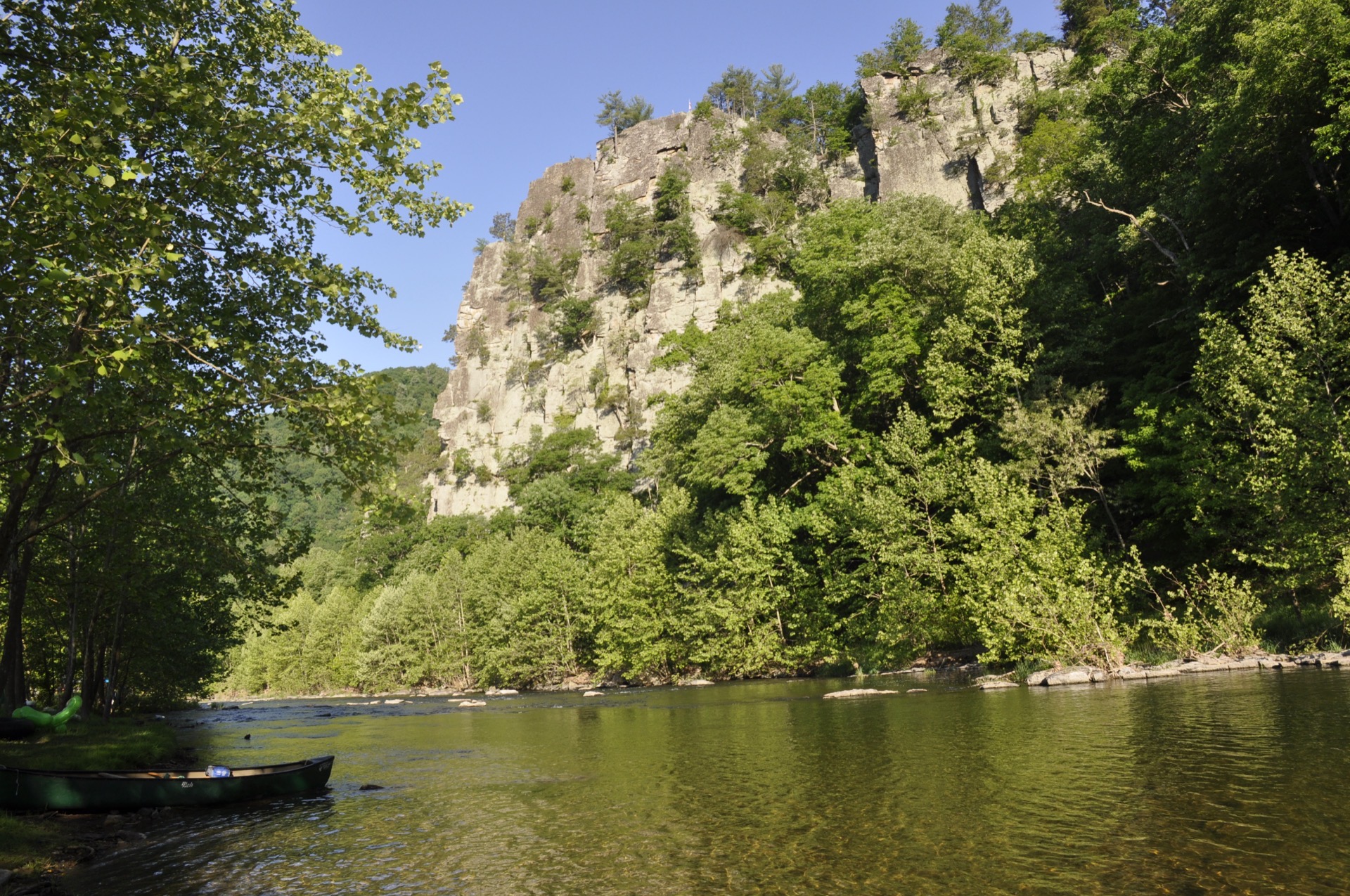
The river passes directly beneath Seneca Rocks -- a 900-foot quartzite fin that's been a landmark for centuries. Downstream, it enters Hopeville Canyon, described as "one of the most beautiful canyons anywhere," with cliff walls, rock formations jutting from the water, and bald eagles overhead.
Photo: Jim Hopkins
Three route options plotted on topo tiles. Toggle layers to compare. The recommended "Sweet Spot" route is highlighted.
Three ways to run the North Fork. Pick the one that fits your group.
| Day 1 | Judy Gap to Seneca Rocks | 11 mi |
| Day 2 | Seneca Rocks to Hopeville Canyon | 9.6 mi |
| Day 3 | Hopeville Canyon to North Fork take-out | 9-10 mi |
Best for: Full North Fork experience, escalating difficulty
Watch out: 30 mi is ambitious with loaded boats. Day 1 is long after a 3-hour drive. Min 400 CFS.
| Day 1 | Riverton to Seneca Rocks area | 7.4 mi |
| Day 2 | Seneca Rocks to Hopeville Canyon entrance | 9.6 mi |
| Day 3 | Hopeville Canyon to take-out | 4-5 mi |
Best for: First trip on this river. Best daily mileage split. Most margin for low water or delays.
Watch out: Misses the upper 3.5 miles from Judy Gap. Day 3 is short (but that's the canyon highlight).
| Day 1 | Judy Gap to Seneca Rocks | 11 mi |
| Day 2 | Seneca Rocks through Hopeville to South Branch | 14 mi |
| Day 3 | Smoke Hole Canyon to Petersburg | 10-12 mi |
Best for: Maximum adventure. Two canyons (Hopeville + Smoke Hole). Finish in a real town.
Watch out: 36 miles in 3 days is a push. Day 2 at 14 mi + Class III is a grind. Min 500 CFS. Royal Glen Dam hazard on South Branch.
The Sweet Spot route -- Riverton to Hopeville Canyon. 21 miles over 3 days with 2 nights on the river.
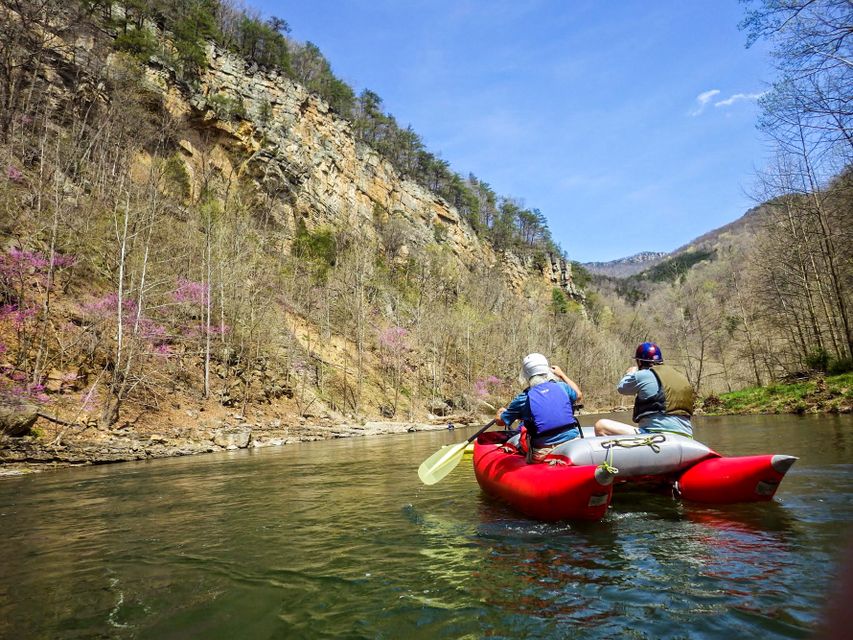
Photo: WVU DIY Outdoors
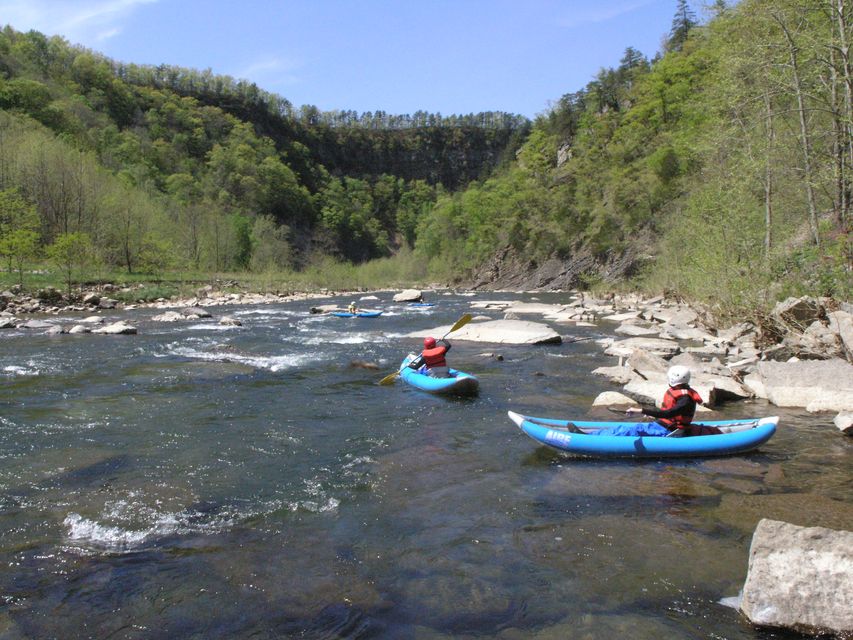
The warmup day. Launch from Riverton after the drive from Harpers Ferry (~3 hours) and shuttle setup. The river here is rock gardens and ledges -- diverse rapid types that shake off the rust without pushing the difficulty. Mountain scenery from the start.
Photo: Mr.schultz / CC BY-SA 3.0
Photo: Jarek Tuszynski / CC BY 3.0
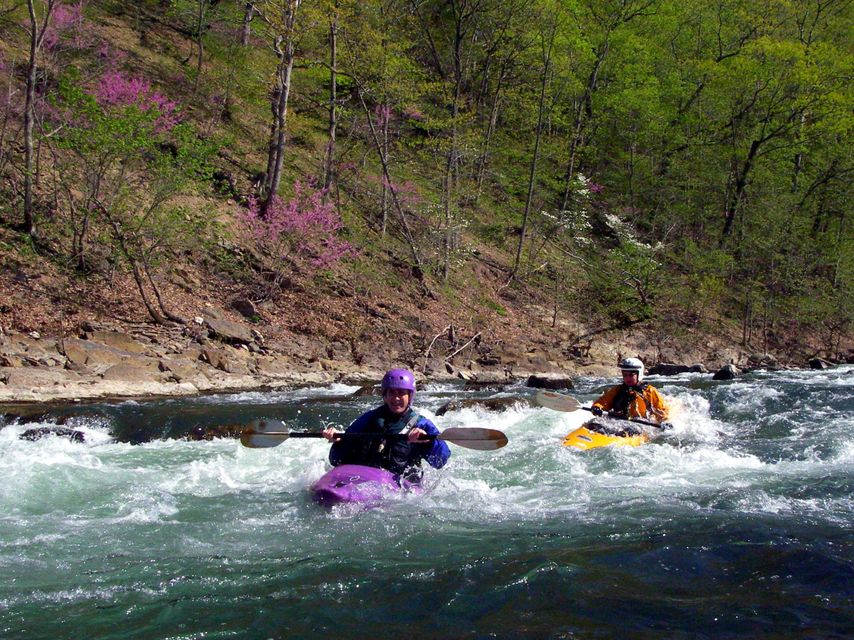
The big scenic day. Launch with Seneca Rocks at your back and paddle the "Cruiser Course" -- consistent Class II rapids with the best scenery on the entire river. Champe Rocks and North Fork Mountain's 100-foot quartzite cliffs frame the valley. Eagle country.
Photo: WVU DIY Outdoors
The highlight reel. Hopeville Canyon is where "one of the most beautiful canyons anywhere" earns its name. Canyon walls close in, rock formations jut from the water, and bald eagles ride the thermals overhead. This is the hardest water of the trip -- Class III -- but it's only 4-5 miles, so take your time and scout blind corners.
Live conditions and forecast for the Seneca Rocks / North Fork corridor. Target window: May 1-4, 2026.
Based on nearby NOAA stations. Elevation ~1,700 ft at river level.
Mid 60s to low 70s. Comfortable paddling in a synthetic base layer + light shell. Sun hat essential.
Low 40s, possibly high 30s. Underquilt or R4+ pad mandatory. Puffy jacket for camp. Fleece beanie.
~42% chance of rain on any given day. May is the wettest month. Tarp setup is not optional.
Afternoon pop-ups start in May. Lightning = get off the water. Monitor NWS radar morning of each day.
440 million years of geology, WWII mountain soldiers, moonshine canyons, and a princess who climbed cliffs. This isn't just a river trip.
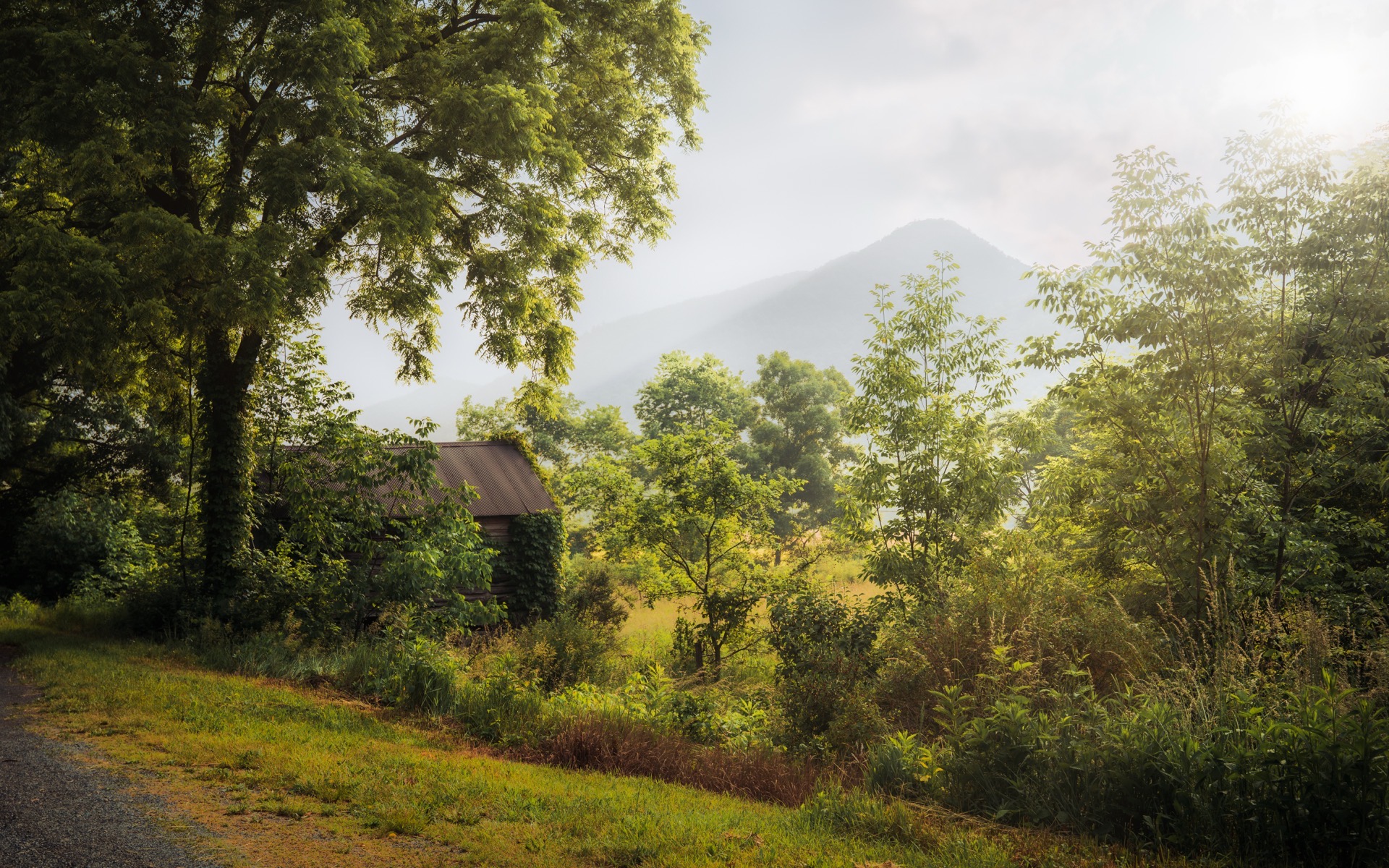
Photo: John Brighenti / CC BY 2.0
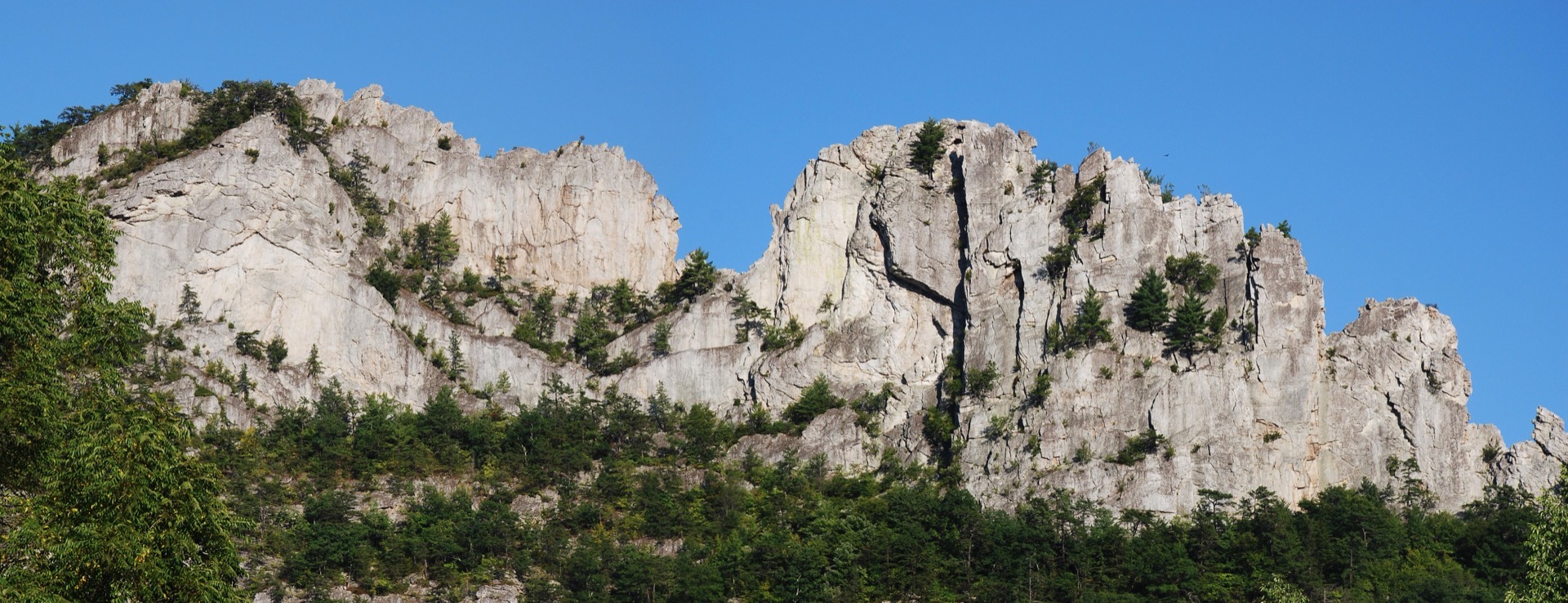
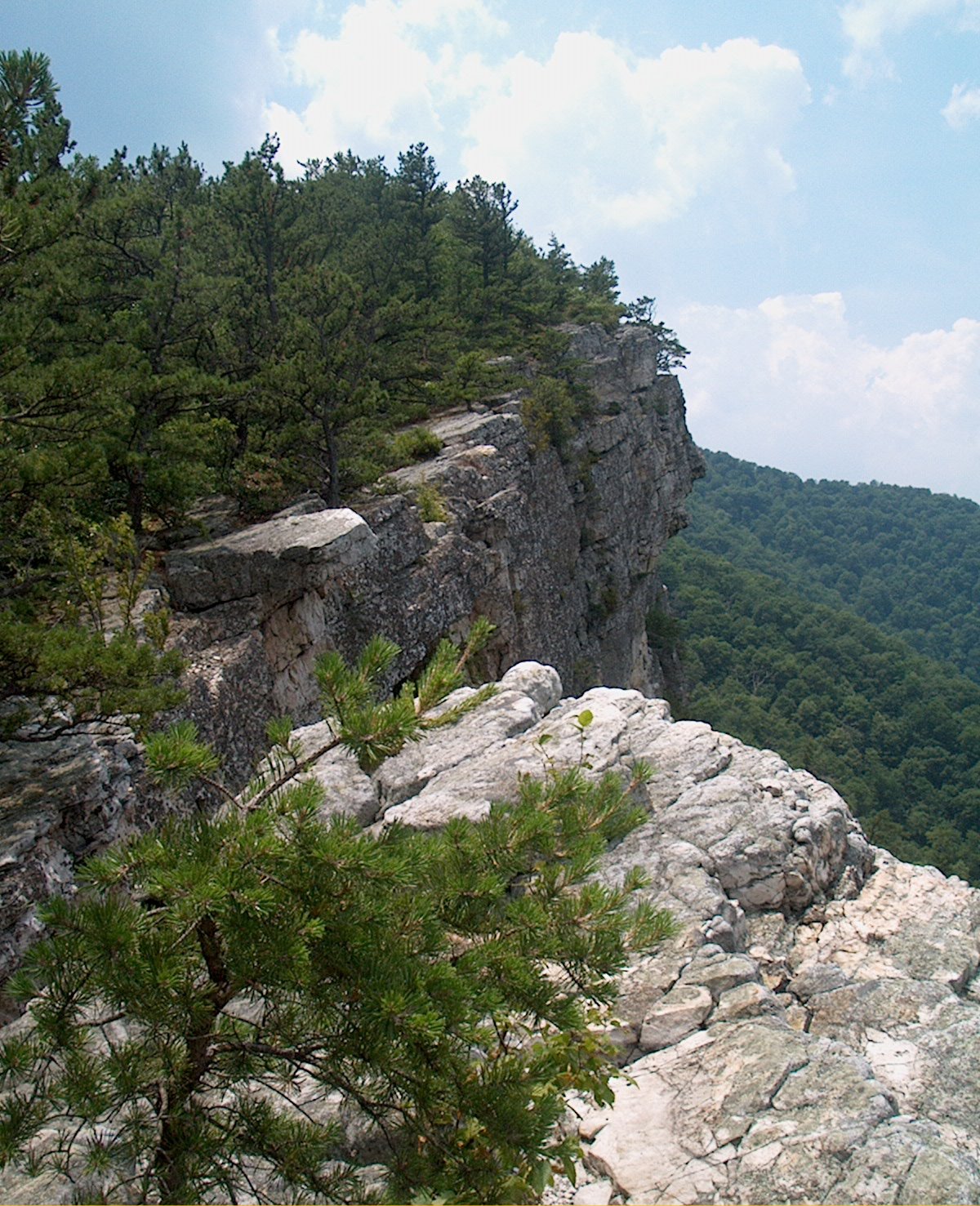
The rock you'll paddle beneath started as sand on an ocean floor during the Silurian Period. Continental collision rotated the strata 90 degrees and compressed it into Tuscarora quartzite -- one of the hardest rocks on Earth. Softer rock eroded away over eons, leaving a 900-foot vertical fin that's visible for miles.
In 1987, The Gendarme -- a 20-ton quartzite pinnacle that had stood for millions of years -- collapsed on a calm, clear day with 6 mph winds. Students at the nearby elementary school heard the roar.
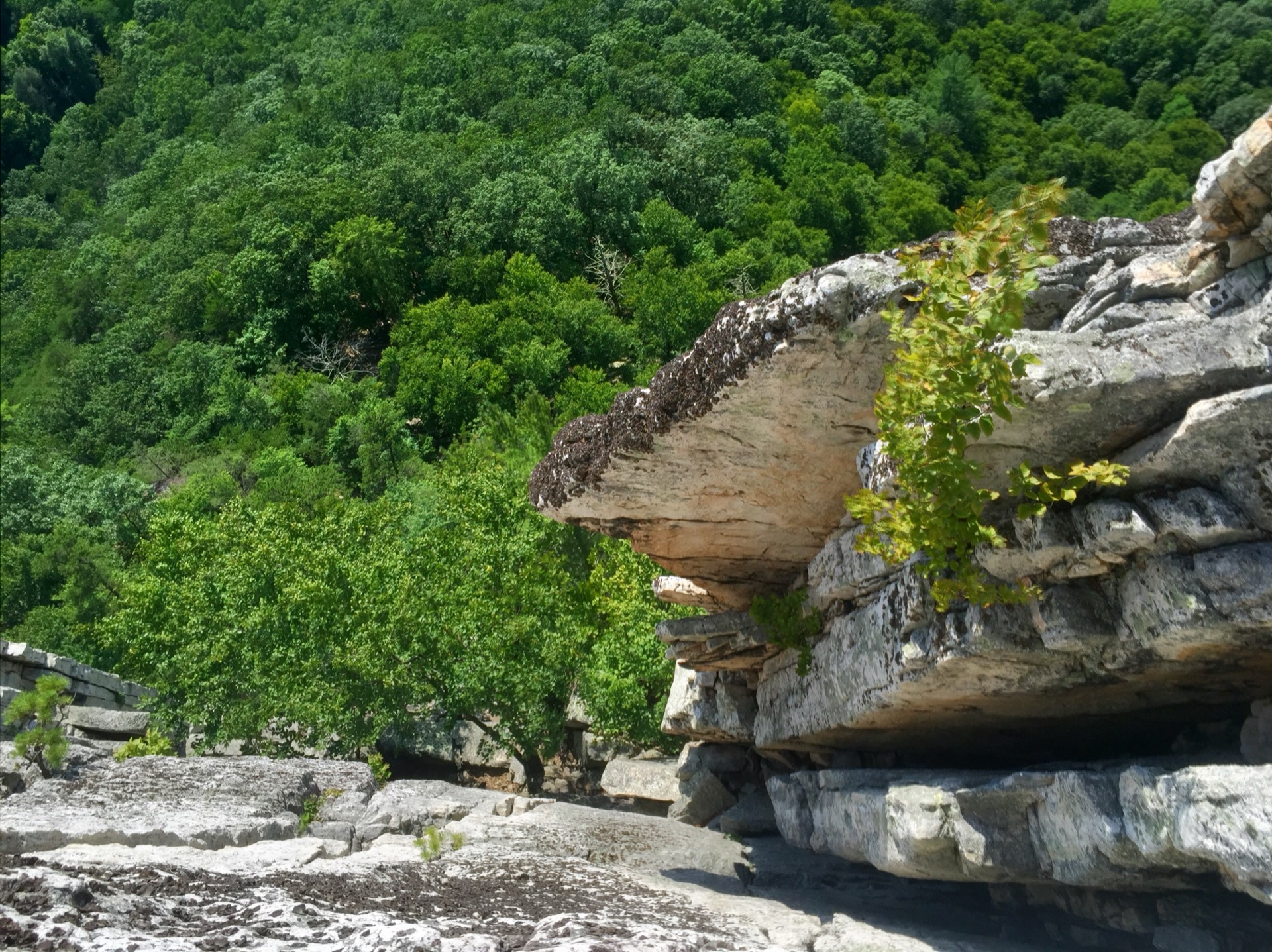
Photo: Jarek Tuszynski / CC BY-SA 4.0
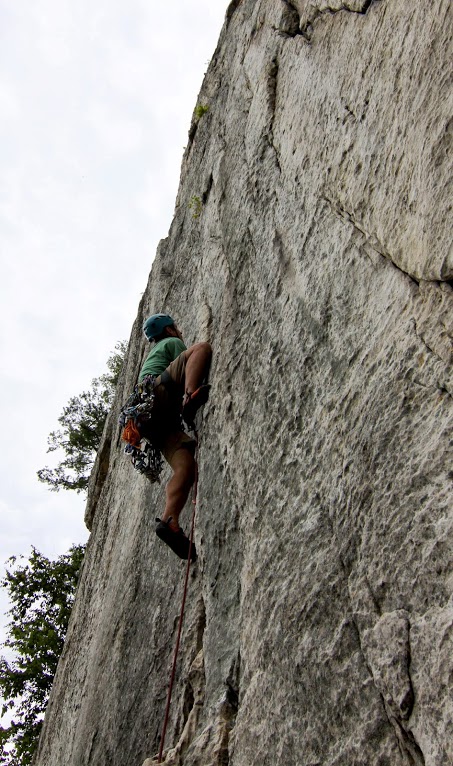
In 1943-44, the U.S. Army's 10th Mountain Division ran the military's only low-altitude assault climbing school right here at Seneca Rocks. Soldiers trained tactical night climbs on unfamiliar rock, learned to muffle piton hammers for stealth, and hauled machine guns up cliff faces.
They left an estimated 75,000 soft iron pitons in the rock. Skills trained here were used to haul heavy weapons up Italian mountain cliffs for dawn assaults against German positions in the Apennines.
According to the tale, Princess Snow Bird -- daughter of Chief Bald Eagle of the Seneca tribe -- challenged her suitors to follow her up the cliffs. Seven attempted the climb; only one made it to the top. They married.
Historical note: The Seneca (Onondowaga) were based in western New York and used these trails for transit and trade, not as permanent residents. The legend is likely a 1932 literary creation, but it's become inseparable from the identity of the place.
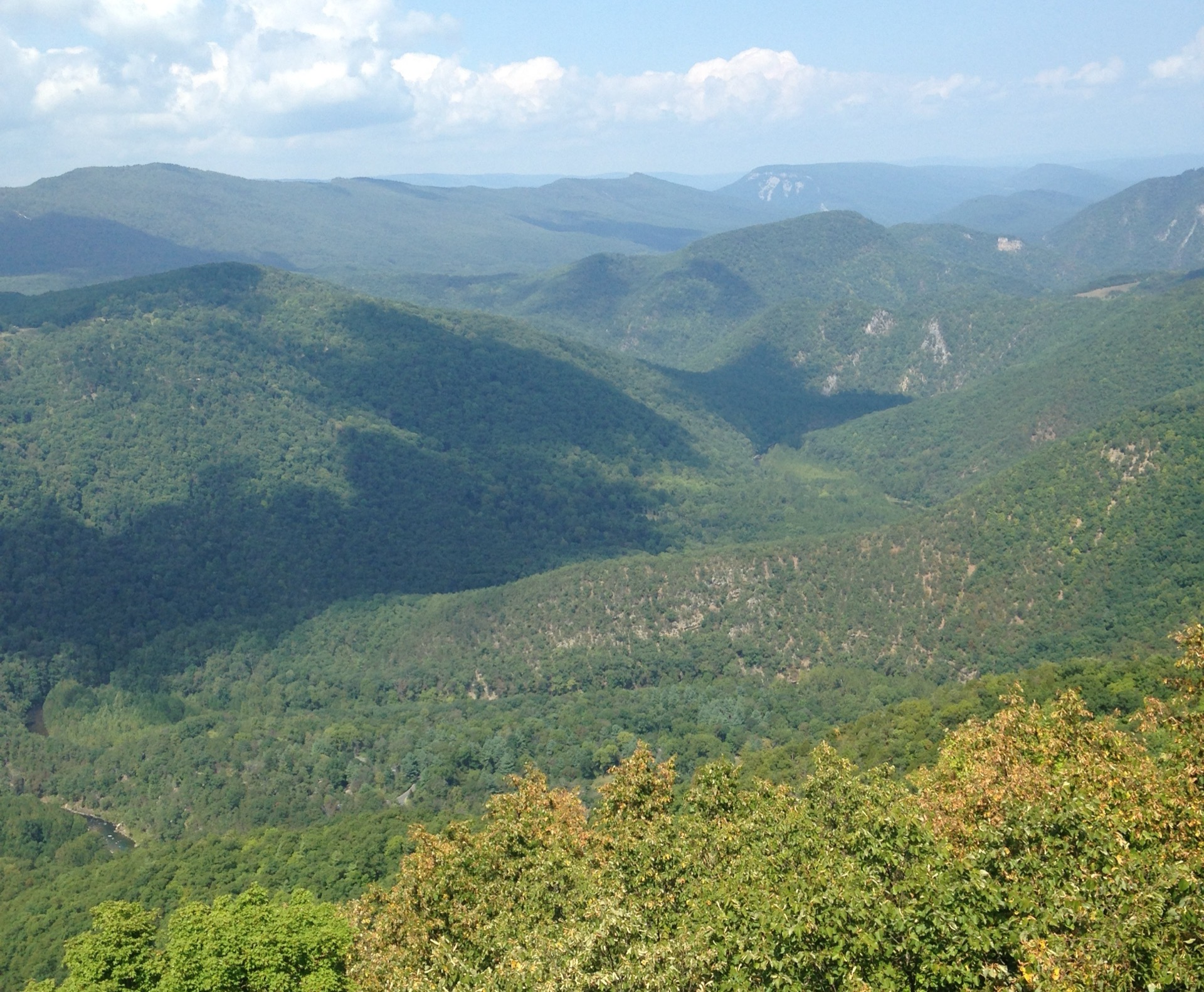
Photo: Valerius Tygart / CC BY-SA 4.0
Downstream of your trip lies Smoke Hole Canyon -- a 20.7-mile gorge with walls over 1,000 feet deep. Moonshine production was a booming cottage industry here, particularly during the 1920s. The canyon didn't get electricity until 1949.
40% of the world's Virginia big-eared bat population lives in the canyon's caves. A single 4-acre island (Hermit Island) hosts 283 documented plant species. The Nature Conservancy calls it "one of the most biologically rich places in the East."
Pendleton County was torn apart. Over 700 men fought for the Confederacy, while Unionists in the Seneca area formed Home Guard companies. The split was literal -- brothers James Boggs (Confederate) and John Boggs (Union) led opposing guerrilla forces in the same county.
Confederates mined saltpeter from caves in Smoke Hole Canyon. Union Home Guards -- called the "Swamp Dragons" -- destroyed the operations. A commandeered church (Camp Luther) was reportedly burned by local women to prevent further military misuse.
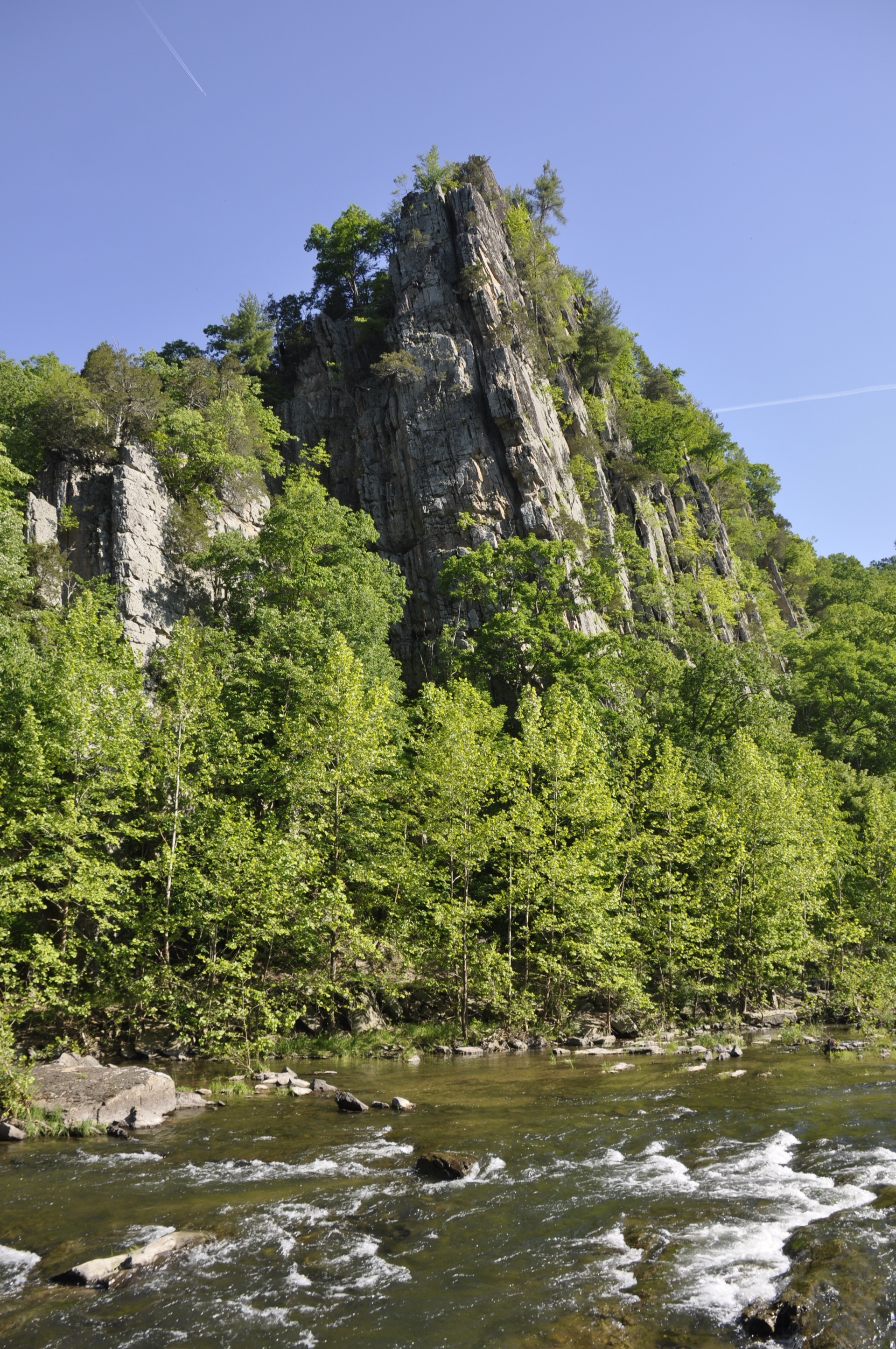
Photo: Jarek Tuszynski / CC BY-SA 4.0
The North Fork corridor is serious wildlife habitat. Bald eagles nest in Hopeville Canyon and along the South Branch. Peregrine falcons hunt from the cliffs of Seneca Rocks and North Fork Mountain. Great blue herons work the shallows.
The river has excellent fishing -- native brook trout in the colder reaches, rainbow and brown trout throughout, and smallmouth bass that may descend from roughly 30 fish introduced at Cumberland, MD in the 1850s.
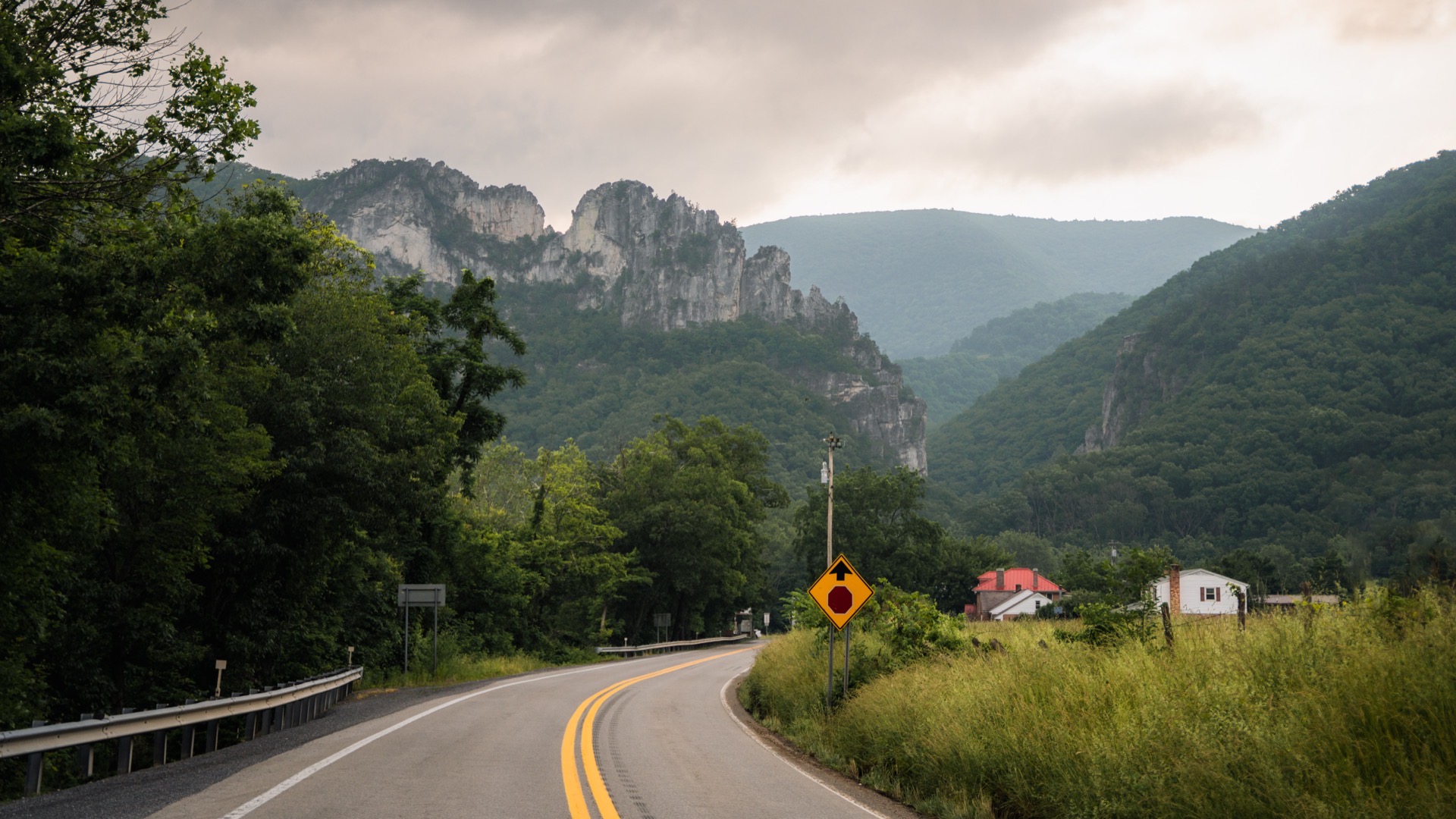
Real photos and satellite imagery from the North Fork corridor. Click any image to view full size.
Emergency contacts, bail-out points, and what to watch for. File a float plan before you launch.
| 911 | Pendleton County Emergency |
| (304) 358-7122 | Pendleton County 911 (non-emergency) |
| (304) 257-1026 | Grant Memorial Hospital ER (Petersburg, 32 min from Seneca Rocks) |
| (304) 567-2900 | Seneca Rocks Volunteer Fire Dept |
| (304) 257-4488 | USFS Cheat-Potomac Ranger District |
| (304) 567-2827 | Seneca Rocks Discovery Center (seasonal) |
| 1-800-222-1222 | Poison Control |
Route 28 parallels the river for most of its length. You are rarely more than 1 mile from a road.
| Riverton | Mile 0 -- on the road, flag traffic |
| Rt 28 crossings | Miles 2-7 -- multiple pull-offs |
| Seneca Rocks | Mile 7.4 -- parking, stores, possible cell service |
| Rt 28 pull-offs | Miles 8-15 -- river stays close to road |
| Rt 28 large pull-out | Mile ~17 -- LAST easy bail-out before canyon |
| Hopeville Canyon | Miles 17-22 -- NO road access. Most committed section. |
| Jordan Run Rd | Mile ~22 -- first access after canyon |
AT&T is the only semi-reliable carrier in this area (~62% coverage). Verizon and T-Mobile are nearly useless.
You may get signal around Seneca Rocks and along Rt 28 in spots. Expect ZERO service in Hopeville Canyon and much of the river corridor.
Strongly recommended: Garmin inReach Mini 2 satellite communicator. Two-way texting, SOS button, GPS tracking. ~$15/month plan. Clip it to your PFD -- not in a bag.
April: Highs 58-61F, lows 35-41F. Frost is real. Water temps 40-50F -- dress for immersion, not air temp.
May: Highs 70-71F, lows 49-50F. Wettest month. Afternoon thunderstorms. River can spike fast.
April water temps are 40-50F. At 50F, you have 1-3 hours before exhaustion from immersion. At 40F, 30-90 minutes.
Cold shock response (first 1-3 min of immersion) causes gasping, hyperventilation, panic. This is what drowns people.
Minimum gear: Dry top + wetsuit bottoms + neoprene booties. Better: full drysuit.
NO COTTON. ANYWHERE.
Print two copies (one per boat, in waterproof bags) and leave one with someone at home. Include:
Two vehicles, one simple loop on paved Rt 28. Drop a vehicle at take-out, drive together to put-in, paddle downstream to your truck.
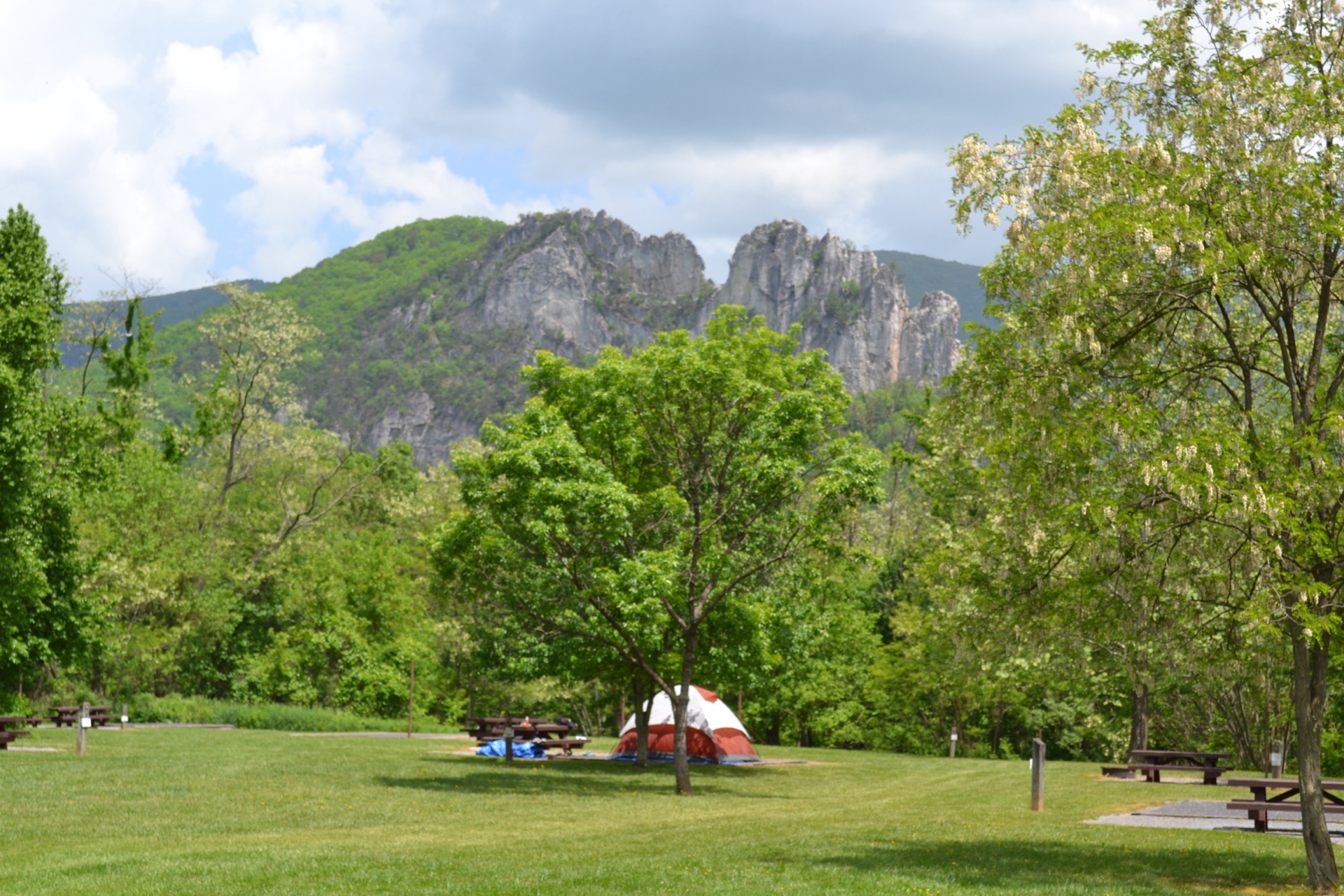
Both vehicles drive from Harpers Ferry (~2.5-3 hrs via US-48W). Stop in Petersburg for gas, ice, groceries -- last real town. Continue to Seneca Rocks. Camp at Seneca Shadows ($17/night) or Yokum's (first come, first served).
Eat breakfast, pack everything into/onto both vehicles. Top off gas at Harper's Old Country Store at Seneca Rocks -- last fuel before the river.
Both vehicles head north on Rt 28 (~13 mi, ~20 min) to the Jordan Run Rd pulloff. Park Vehicle A on the shoulder across from Jordan Run Rd intersection. Lock it, hide valuables. Confirm you can find this spot from the water side before leaving. Navigate to Take-Out →
Both guys in Vehicle B. Drive south on Rt 28 through Seneca Rocks to Riverton. ~25 min. Park Vehicle B -- best option is the North Fork Baptist Church lot (ask permission day before, they have river access out back). Fallback: wide shoulder pull-off on Rt 28 near the river. Navigate to Put-In →
Carry boats ~200-300 ft from road through flat wooded floodplain to river. Final safety check, PFDs on, satellite communicator clipped to vest. Hit the water.
Load boats onto Vehicle A at the Jordan Run pulloff. One guy drives back south on Rt 28 to Riverton (~25 min) to pick up Vehicle B. Regroup at Seneca Rocks for food/debrief, then head home. Home by ~6:00 PM.
| Harper's Old Country Store | Seneca Rocks | Gas, food, ATM, propane. Last fuel before river. |
| Yokum's Vacationland | Seneca Rocks | Campground, cabins, store. (800) 772-8342 |
| Smoke Hole Shuttle Services | Smoke Hole area | Backup shuttle service for this exact corridor |
| Potomac Ranger District | Petersburg | (304) 257-4488 -- call for parking/access questions |
| Petersburg | ~100 mi | ~2 hrs | US-48W |
| Seneca Rocks | ~125 mi | ~2.5-3 hrs | US-48W, then Rt 28 south |
| Riverton | ~130 mi | ~2.75-3 hrs | US-48W, Rt 28/US 33 south |
When to go, when to wait, and how to make the call.
Based on 85-year average flows at the Cabins gauge:
Peak spring flow window. Cold -- dress for immersion.
Still prime. Slightly warmer air.
Good historically. Flows starting to taper.
Best balance of water + warm temps. Recommended for comfort.
Viable. May is the wettest month -- rain events likely.
Tailing off. Check the gauge.
Start watching the Cabins gauge daily.
Check NWS forecast for the watershed (zone WVZ505). Look for rain events that push flow up.
Make the call. 400+ CFS and holding = GO. Below 350 with no rain forecast = POSTPONE.
Final check. If it spiked above 1500 CFS overnight, consider waiting 24 hours.
| CFS at Cabins | Conditions | Verdict |
|---|---|---|
| < 300 | Constant scraping, walking your boat | NO-GO |
| 300-400 | Bony. Bumping through shallow riffles. Tedious. | MARGINAL |
| 400-600 | Good. Float clean through most features. | GO |
| 600-1000 | Ideal. Full coverage, fun rapids, good flow. | SWEET SPOT |
| 1000-2000 | High and fast. Experienced only. | CAUTION |
| > 2000 | Flood territory. | NO-GO |
85-year averages at the Cabins gauge (USGS 01606000):
| Month | Avg CFS | Paddleable? |
|---|---|---|
| March | 920 | Prime month |
| April | 887 | Prime month |
| May | 699 | Good, tails off late May |
| June | 369 | Marginal |
| July | 146 | Too low |
| August | 117 | Lowest month |
The Greenbrier River is in a completely different watershed. When the North Fork is too low or too high, the Greenbrier is often just right. Class I-II, designated campsites, 1.5-2 hr drive from Seneca Rocks.
View Contingency Plan →